
the story
Memory returned to.
Family remembered.
Lives intertwined.
at its heart
Damage acknowledged.
Loss endured.
Beauty restored.

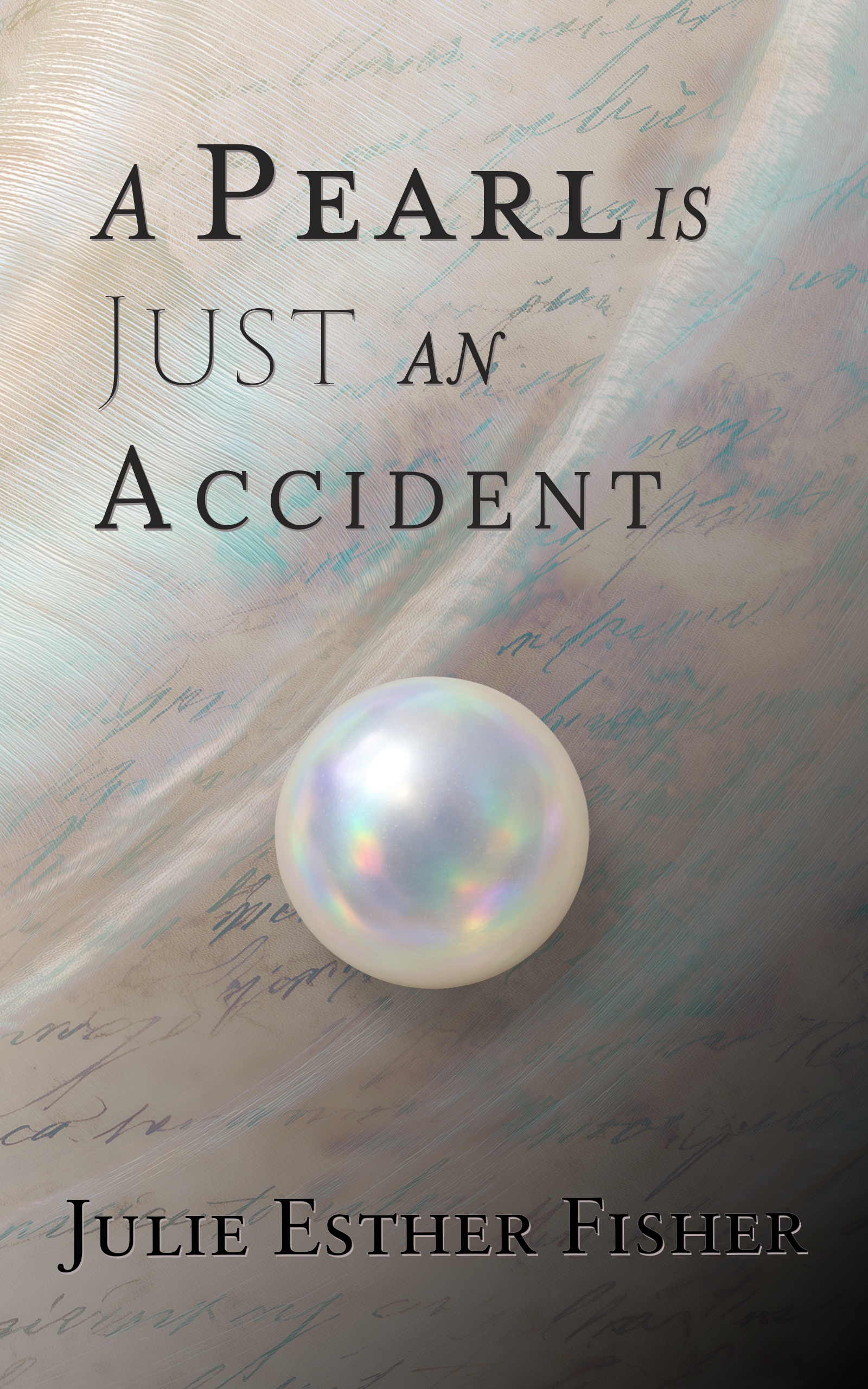
new
Fifteen interconnected stories trace the lives of characters bound by memory, family, and the quiet legacies they inherit. At the center is Eliza James, a paintings conservator whose work restoring damaged art mirrors her search for meaning within the fractures of her own past.
Moving between London and America, Julie Esther Fisher explores the ways beauty and brokenness coexist, revealing how the smallest acts of grace can reshape a life.
Some damage runs too deep for any restoration. Some wounds calcify into something harder, stranger, and unexpectedly luminous.
reviews & PRAISE FOR JULIE ESTHER FISHER
A painting conservator works to restore the beauty found in both art and soul in Fisher’s novel-in-short-stories.
There’s a scar that no one sees—it’s an ugly mark on the face of a nobleman, hidden underneath layers of shame and paint, not meant to be witnessed by anyone, past, present, or future—that is, until Eliza James gets her hands on the painting. When esteemed art collector Felix van Leyden commissions conservator Eliza to clean and restore a portrait of his ancestor, Jan van Leyden III, he sets in motion a deeply personal journey that neither he nor Eliza could have predicted. Like paintings, humans “reveal themselves gradually, in layers,” and sometimes those layers are tainted with enough tragedy to stand the test of time. Though Eliza dreads the idea of returning to London, the scene of her tumultuous childhood, this “seventeenth-century Dutch portrait destined for the National Portrait Gallery…was the commission of her dreams, the restoration that would make her career.” As she studies, cares for, and repairs the painting alongside mentor and friend Lawrence Ames, Eliza unearths truths not only about the van Leyden family, but also her own. Fisher has crafted a haunting and heartfelt tale of familial trauma in the form of 15 stories, each one raw and vulnerable. Eliza’s narrative is about the beauty and pain of survival; a pearl is only formed when there’s a wound from which it can grow. Each enigmatic and flawed character is a puzzle, and the author’s poetic yet accessible prose beckons the reader to put those pieces together. Displaying deep insight into the human heart and mind, Fisher evokes compassion for the most depraved of personalities and frustration regarding the most sympathetic. The poignant metaphor of art restoration drives the reflective tale; like restoration, healing is “a lengthy and emotional process” that challenges even the strongest of souls, but Fisher’s novel reveals that there is beauty in even the deepest scars.”
An affecting and provocative tale of art, beauty, and recovery.
— Kirkus Reviews
“Original, exceptional, deftly crafted, memorable, and a compelling read from start to finish, A Pearl Is Just an Accident is an extraordinary series of connected short stories that showcase author Julie Esther Fisher’s genuine flair for the kind of character and narrative driven storytelling style that raises her stories to an impressive level of literary excellence. While A Pearl Is Just an Accident is especially and unreservedly recommended for community and college/university library Contemporary American Literary Fiction collections, it should be noted for personal reading lists of readers with an interest in the psychological fiction genre…”
— Midwest Book Review
“The dramatic opening of (Julie Esther Fisher’s) A Pearl is Just an Accident begins the extraordinary journey to be taken by Eliza (James), an art conservator who is hired to restore a 17th century painting, armed with the knowledge that “Restoration is a lengthy and emotional process.” It is this process that she herself must undergo as she removes the layers of lies obscuring the truth of her own life, and reveals the riveting story of her damaged but generous heart.”
— Pamela Painter
Author of Fabrications: New and Selected Stories
“Sensual and searing, unsettling and beautiful, Fisher’s connected stories create a kaleidoscopic portrait of a family caught in the inescapable vortex of the past.”
— Elizabeth McKenzie
author of The Portable Veblen and The Dog of the North
“The writing in these interconnected stories is unsentimental and remarkably observant, revealing a family’s layered and intimately human inner life—where memory is both witness and accomplice, and where growing up amid instability leaves questions that can never fully be answered; Julie Esther Fisher resists the urge to explain, leaving us quietly unsettled and deeply moved by what remains unspoken.”
— RONALD SPATZ
EDITOR OF ALASKA QUARTERLY REVIEW
“In A Pearl is Just an Accident, Julie Esther Fisher offers layered stories of a family’s memories, hopes, and secrets held individually and together. Through prose that is at times radiant and always accessible, readers burrow into the hearts of parents and siblings split in time and geography. Story by story, trauma is shared or hidden away until it is finally addressed. Each character adds their own personality—complete with flaws and delightful foibles—into a human and humane mix. The resolution of this collection’s arc deposits readers in a better place both in the fictional world and the larger one in which we live.”
— Laine Cunningham
Publisher and Sr. Editor, Sunspot Literary Journal
“Julie Esther Fisher has written a work so moving, so poetic, so layered and subtle that it feels as if we have always been plumbing the depths of these unforgettable characters. The sentences pulse with emotional power and a strange, unsettling beauty, revealing the ways we wound one another—utterly, exquisitely—and reminding us that forgiveness can arrive just as violently and unexpectedly.
The book’s central metaphor is restoration—of art and of the soul. It begins when an art restorer encounters a new professional challenge, a portrait so unusual that it forces her to confront her own personal mysteries and complicated past. What unfolds is not just the story of an individual, but of a family in crisis, one that has inherited the very kind of stain the restorer must investigate. Does she illuminate the stain, or bury it? Can this family find self-awareness and, in doing so, find love or be saved?
It is often art—both Fisher’s and the artistry of her heroine, Eliza—that proves transformative. Fisher illuminates the human condition with striking psychological insight, rendering even Eliza’s father, Clifford, marred by the darkest of stains, with a depth that evokes compassion. Fisher’s characters are varied and lively and surprising, yet she has also created for us a Mrs. Dalloway consciousness in her rebellious main character, a girl and woman who distinguishes herself not just by her rebellion but by richness of her internal life.
This is a novel with a clear moral center, one that confronts damage without turning away from the possibility of grace. Fisher shows how beautiful people can be at the point of decay, suggesting that such unraveling may itself be a kind of cleansing— the stripping away of what is not essential. Like the restorer who uses spirit to remove centuries of dirt, Fisher exposes the scars, and in doing so, reveals what is human and worth preserving.”
— Patricia Stacey
Author of The Boy Who Loved Windows
BOOK DETAILS
Publisher
Silent Clamor Press
Publication
October 2026
Format
Hardcover • Paperback • eBook
Genre
Novel in Stories
The unpeeling of wallpaper
and time.
Arcades of time
passed through.
IN HER OWN VOICE
Listen to Julie read an excerpt from A Pearl Is Just an Accident.
READ AN EXCERPT
Français Aujourd’hui
“Why don’t you kids make yourself useful. Go inside and get some scissors. Cut that lawn over there. This place needs some sprucing up—”
There were two pairs of scissors, one sharp, one woefully dull, and though my sister Lily offered to make a go of it with the dull ones, I agreed to give her the good ones if she stopped crying.
Our father commented from the veranda.
“To the left, Lily. No, not my left—yours—”
And individual blades of grass drew comment from his intermittent tours of inspection.
“Clip them all to the same height, Eliza. Your sections are uneven.”
These I returned to and summarily snipped. All I had to do was think of my mother, and nothing living escaped deliverance from those scissors.
We were vacationing in the South of France. The sun-drenched villa perched on cliffs overlooking the sea. There were pear orchards. That was where I had hid the night before to see it happening, the strange arithmetic of marriage—the subtraction—how, by candlelight, with graceful dancing limbs, dusky murmurings ending in a slap, four became three. I alone saw this; my little sister slept. Now that slap was everywhere. It inhabited the flesh of the growing pears. If we stayed here for long enough, we would be eating it.
We had woken up this morning to find our father on the veranda. His face was sallow; his fat body slumped.
“There’s something I have to tell you,” he’d said.
I stepped in front of my sister to soften the slap that survived the night to end up here.
“Your Grandmother’s sick. Your mother’s gone back to the States.”
“When will she be back?” Lily asked.
My father peered vaguely in the direction of the orchard. “I don’t know. We’ve got this place now. We’ll have to make the best of it.”
I stared stonily at the veranda’s columns. Dry paint was peeling from them. My own eyes felt just as dry. I kicked at the marble stoop until my toes stung.
“What will we do without Mommy?” Lily sniffled. A few tears leaked from her eyes.
He stared down at us. That was when he ordered us inside to get the scissors.
Now we crouched and snipped. The sun beat down on our backs.
At twelve-thirty, when the sun was at its hottest, he retired to the shady veranda out back. Hunkered in the grass, Lily and I waited. It was so quiet we could hear his footsteps trudging across the villa’s marble floors, a door swinging on its hinges, and then the creaks and groans of the hammock announcing its burden. A moment later came the snores: thick and regular.
We laid down side by side in the narrow swath it had taken us hours to cut. It was a green grave from which I squinted up at the sun through the branches of a pear tree at the edge of the orchard. The heat settled on top of us, as if the sun had gotten snarled in the branches and couldn’t go down.
I said, “She’s not visiting Grandma, you know. She’s leaving Daddy. She may have someone else.”
Lily propped up on an elbow.
“You think Mommy’s a bigatist?”
Under that French sun the whole world seemed a dry dazzling white. Even the young pears loading up the branches looked bleached and artificial.
“Bigamist. But do you even know what that word means?”
“Maybe we’re not really his?”
I turned to her.
“We’re his. If anyone’s the bigamist, it’s him. Probably that’s why Mommy left.” I waved a fly out of my face. “She probably isn’t our real mother anyway.”
Lily looked shocked. “Don’t say that! Of course she is.”
“I bet the strain of it got too much.”
She sat up. “What strain?”
“The strain of raising us, naturally, someone else’s kids. Besides, we’re not easy, you know . . . Well, you’re never any trouble . . .”
Lily took my hand, looked me in the eye.
“Elzie James, are you telling me the truth?”
“Of course,” I said, shaking her off. “What, are you calling me a liar?”
A moment passed. My sister took the measure of me.
“Well, if Mommy isn’t our real mother, then who is? It isn’t Alexandra, is it?” she asked with dread of the housekeeper. “But she doesn’t even like him.”
I rolled my eyes.
“Dummy, who says you have to like someone to marry them?”
We crept away to spy on that housekeeper through the kitchen window. I could feel Lily examining Alexandra with new eyes. A sharp-featured old woman, she held knitting on equally sharp-looking needles and looked like someone to steer clear of. Suddenly our father appeared in the kitchen doorway. We crouched lower. Alexandra mumbled a swift “Bonjour,” to which he replied, “What the heck’s so good about it?”
He walked toward the fridge.
“Ah, Monsieur James,” she chided, “s’il vous plait—nous pouvons manger dans une heure . . .”
“That may be,” our father replied. “But on ne mange pas real food.”
From outside, we saw his big hand on the unopened package of hamburger meat. With our mother gone, he had to do for himself. Cutting it open, he sank his knife into the red and white worms of meat and spread it raw on to an oval slice of Jewish rye, bringing it to his mouth before the spreading was even complete. Four, maybe five slices before trudging off to his chamber to collapse on the bed. We peeped in. There he lay in his underwear, snoring, a great spill of a birthmark half exposed on his gut: a deep, strawberry red anchor.
I began to believe my own lie that our mother was not ours. It explained how easily I could act like my father.
Now, crouched at the villa’s kitchen window, “Here are the scissors,” I said to Lily. “Get going.”
She looked at me without surprise, with that expression of inevitability and premature forgiveness which only made me more contrary.
There had been a whistle. I had heard it before, but only in France did it seem to be summoning me too. I’d followed the lazy purr of a saxophone floating from an old radio and it led me to a clearing in the orchard. My father had lit candles. The flames brightened the whites of their eyes. Scuffing the dust, they danced. Their bodies cradled each other. My mother’s head was on his shoulder. I hid behind a tree. Their words floated, stirring the air, the leaves. My ears were hungry for such murmurings.
“The agent wasn’t kidding,” my father said. “This place is a palace. And for four blissful weeks, it’s ours. What do you think, Rosie? Will it suit?”
“What are we going to do here for four weeks?” she said, lifting her head. Her lips were a bright balloon red.
“Do? There’s plenty to do,” he said. “And there’s stuff nearby. Monte Carlo isn’t far.”
She turned toward him. “As if coming here wasn’t enough of a gamble . . .”
“You were gambling that in five, ten years he’d still be around to worship you.”
My mother had a parasol beauty that looked particularly good under the French sky. She had prepared for this trip, bought a little string bikini. There was a sheer cover-up too through which the bikini would show. They were as proud of her body as they were of my rare sorties into school work.
Her remoteness held a kind of majesty. Even from a distance, the weight of it bore down on me.
“You’re happy now,” my father said.
I wondered what was paler, her face or the moths.
“How much did you spend on this place?” she asked. “Will you win it back?”
“I did you, didn’t I?”
“The children will be happy here,” she said duskily.
A clumsy moth bumped her face, lost perhaps on its way to the flame. She brusheed it gently along.
“Wipe that stuff off your lips. Kiss me.”
I had blushed at the thought that they wouldn’t be able to help themselves, they’d get swept up in some icky passion. But the kiss, when it came, was scarcely a graze, light enough to allay my fear that he’d end up with her mark on him.
My father unraveled as surely as the mysterious garment Alexandra undid each night, to begin anew the next morning with the same kinked yarn. One night I was wakened from a fitful dream. I left Lily sleeping and walked toward the strange sounds which I deduced must be my father weeping. They weren’t loud sounds, but they were deep and penetrating, and they traveled the villa’s long hallways and twisting corridors with determined desolation. I descended to the kitchen, opened the ice box, and snagged the last slice of Jalousie. I put it on a tray with a tall glass of Cassis and followed the doleful sounds out on to the veranda. Handing it to my father, I wrapped my arms around his belly. In that moment, I forgot what he might have said before she slapped him. He had to hold the tray out to avoid my burrowing head.
In its sprawling opulence, the villa mocked our shrinking numbers. The textured magnificence of the furnishings contrasted with the monotony of the motherless, wifeless lives we now lived.
Our father moped over his French cuisine at his solitary station, the verandah. Lily and I ate at the banquet table in the dining room, an immense slab of mahogany so polished that, looking into it, it was as if we were feeding our reflections. We were waited on by a handsome boy, Philippe Pierre, whose father, we guessed, must be a mortician. Philippe wore a black jacket we were sure served a gruesome double duty. When he drew close to me with the silver service of petit pois or fillets de rouget aux herbettes, a pungent smell wafted up from the outstretched sleeve. This morning he whispered, “You are preety,” which caused my cheeks to flame and Alexandra to look up over the rims of her specs.
We had our choice of a dozen different bedrooms. The windows in these were all sealed shut, screened by stiff, savagely pleated draperies. No breeze blew through. You couldn’t hear the sea. Everything was dark and shut up; the silence was deep and aspidistral. Phantoms lurked beneath this crust of neglect. My mother’s, however, was nowhere amongst them.
“Do you really think Mommy’s never coming back?” Lily whimpered from inside cool mimosa sheets. “Then why aren’t you sad? Who’s gonna take care of us?”
It was nine o’clock, the light was declining. The balcony doors pried open, the wild sea was just a blur over the treetops.
“I am sad,” I said touchily, batting the festoon that looped between the four posters of our bed. “I’ll have to take care of you. I’m older. You don’t know the ropes.”
“What about Daddy?”
The deep sigh that escaped me stirred some extravagant feathers sprouting from a vase.
“He’s a gambler. He doesn’t know what to do with kids.”
Lily huddled closer.
“Mommy’s probably out interviewing orphanages,” I said authoritatively.
“Orphanages?”
“Yeah. She’ll pick the best one and then she’ll give us up. Officially. The most we can hope for is that we won’t be split up . . . I wouldn’t want to be. I like you, kiddo.”
I planted a small kiss on her forehead.
“I like you too, Elzie. A lot. But you lie.”
“Do not—”
“Yes, you do. All the time. I never know whether to believe you.”
Every day, driven by a bungling desire to please my father, I wielded my blades. I excelled at grooming the lawn. Yet day by day his interest in the childish diversion waned. I began to feel guilty for appropriating what had originally been his, began to make blunders and glaring omissions with the scissors I thought would revive him. But these did nothing to allay the dismal moods that chased him back to the veranda, where he brooded in a rocking chair. I heard the rails grinding into the marble floor.
Days stretched to weeks. The pears grew. We heard nothing from our mother. Every day I ran down the driveway to check the mailbox for a letter. I never wondered what she would write to me, only what I would say to her if she did. Our father never wavered in his story about our sick grandmother and I never let on that I knew it was a lie. As time wore on, my yarns became more fantastical. Our mother had been a travel agent before she got married. Maybe she had bought herself a one-way ticket somewhere. Or maybe she really did have a lover, he already had kids, and they didn’t want more. Feeling more French by the day, I seemed to lie even better in this new language.
We were walking, my father and I, through the pears. It was so hot that even the orchard flies were cooling their wings in the leaves.
My father said, “I know you were there. I’m sorry you had to see us like that.”
It was not that I couldn’t bear him broaching the subject. What I wouldn’t be able to bear was how different I knew his version would be from mine. My mother’s body was a perfume we both still smelled. Yet what lingered now that she was gone was not her, only something taken from her.
I knew he was lonely, he needed to talk. It would have been so easy. All I had to do was ask and he would have spilled, like dice at the gaming table.
The very next day, he surprised us by saying, “Come on. Let’s get out of this place.”
He took us into town, where flippers and wet suits, inner tubes and rafts filled the windows and stoops of shops. Mopeds farted along the cobbled streets and the boys riding them whistled and caterwauled at me. We ate ice cream cones as we walked barefoot along the beach. I had almost forgotten that there was a world beyond the villa and orchard.
Some boats were shackled together on the sand and our father suggested we rent one—a “pedalo.” Hopping aboard, we squealed when, beneath his weight, the boat dipped so steeply it nearly took on water. We stared at the wolds of flab that hung over his belt.
He told funny stories. For a time we drifted.
He said, “This hasn’t been much of a holiday for you girls, has it?”
“That’s OK,” I replied. I felt airy. With its scattering of sun diamonds, the sea was an artificial swimming pool blue. But there was life beneath, beautiful fish, the occasional eel swimming past.
After the boat ride, we walked home along cliffs. Our father was quiet. I knew something was coming.
“Listen kiddos, I thought I might get away for a while. Go to Monty and play the tables for a couple of days.”
“Is that where Mommy is?” Lily asked.
“No. No . . . I’ve spoken to Alexandra. She’ll take good care of you.”
I grumbled, “But we don’t like Alexandra.”
“What’s playing the tables?” Lily asked.
“Everybody knows that,” I said. “It’s when you go in rich and come out poor.”
I peered over the cliffs and down at the ocean where the waves were whipping up. His news should have come as a surprise, but seemed now as inevitable as the incoming tide we’d narrowly missed.
Later that night, he saw us to bed.
“Don’t be sad, girls. We had fun today. We’ll do it again sometime . . .”
“Tomorrow?” Lily begged.
He switched out the light.
Tomorrow came. But our father didn’t. He went to Monty.